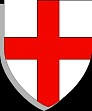
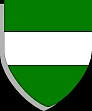
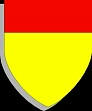
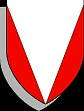
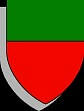
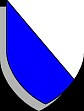
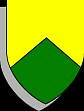
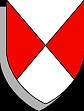
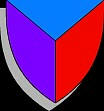
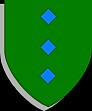
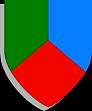
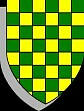
In the heat of battle soldiers needed to be able to identify their leaders as well as their enemies. As knights and lords were covered head to toe in armour they all looked the same. The solution was to paint the shield of each leader with a unique design easily recognised by his own troops. These designs were called shield of arms. Knights had to wear a sleeveless coat over their armour. This coat prevented the armour becoming too hot on sunny days or rusting in wet conditions. The shield design was embroidered on the coat. This was called coat of arms. At first it was up to the knight or lord to pick any design they liked, however as some chose the same design rules were introduced to sort matters out. Richard III founded the College of Arms to oversee all matters concerning heraldry. The College of Arms was were all heralds learned their skills. They were taught to read and write and memorize all designs in use. The language used to describe shield patterns was called Blazon. A herald could describe any design, regardless of how complex it was, quickly and efficiently. A painter could take this description and draw up the design. Heralds were used at battles to identify and record the lords and knights taking part as well as to identify the slain when the battle was over.
The colours used in Heraldry are divided into two groups, metals and tinctures.
The rule for new designs is that a metal should be placed on a tincture and that a tincture should be placed on a metal.
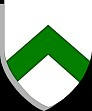
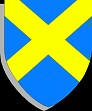
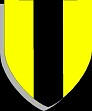
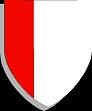
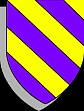
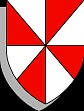
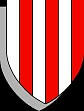
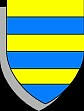
Simple changes to a shield are called ordinaries. These ordinaries arose from the fact that shields had metal strips added to stzrongthen them. It was these strips that were painted. The whole shield was called the field and the strips were called the ordinaries.
The ordinaries can be divided to make sub-ordinaries.
Some sub-ordinaries can be sub-divided.
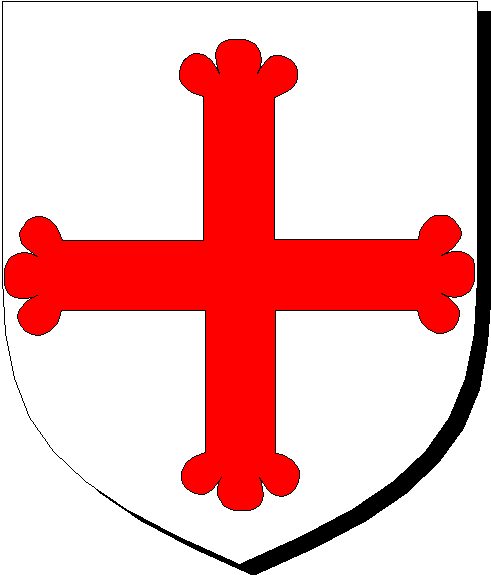 Cross Botony  |